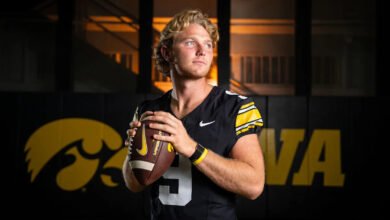

The Atlanta Falcons are the only NFL team still trying to figure out who their starting quarterback will be for Week 1. It’s unprecedented to be this late in the process and still not have figured out whether Michael Penix or Tua Tagovailoa will be their guy.
Cameron Wolfe of NFL Network recently reported that the team eventually wants Penix to be the starter, but without a clean bill of health, they aren’t willing to move forward with that yet. Penix was recently cleared for 11-on-11 practices and, in the days since, has split first-team reps with Tua.
The team could make this a lot easier, but with most things involving the Atlanta Falcons, whether it be winning games or recovering onside kicks, they have to make it more difficult than it needs to be. The simple solution should be to say Penix is the starter, but until he’s comfortable and ready to play, Tua, as the backup, will play.
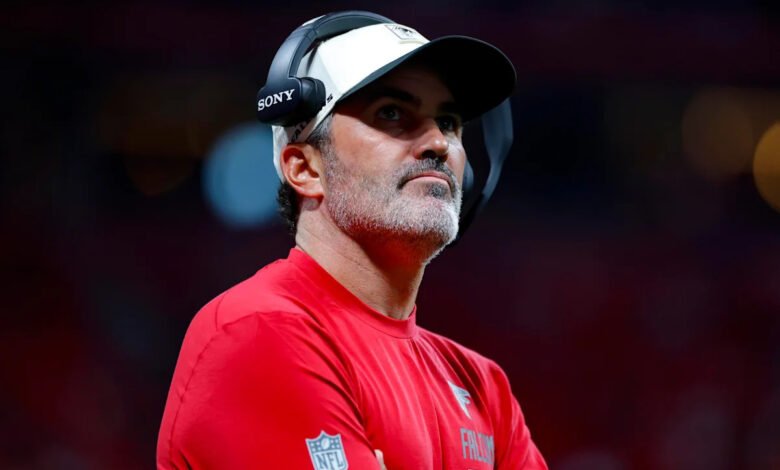
But it’s likely the thing stopping the team from adopting this simple solution is that they’re not yet convinced Penix should be their guy. Why? This delay clearly shows a lack of a cohesive, coordinated vision by head coach Kevin Stefanski, GM Ian Cunningham, and former Falcons QB1 Matt Ryan, the newly dubbed President of Football for the entire universe.
Why a delayed QB1 decision signals leadership’s disconnect
Penix is clearly the correct answer to be the team’s starter for the bulk of 2026, because he raises the ceiling for the Falcons offense. We know Stefanski values accuracy above all else in his quarterbacks, and that’s an area where Penix is lacking compared to Tua. However, ball placement is one of the only areas of quarterback play where Tua outshines Penix. In any other objective measure, Penix is the better option for the Falcons. So if Stefanski can’t put his preferences aside for the greater good of the team, it raises major red flags over whether he’s the right man to lead Atlanta out of their eight-year playoff drought.
Penix’s superior arm strength and willingness to attack downfield are critical areas that make him a better quarterback option. There has been an evolution in NFL defenses over the past decade, with a shift toward two-high shells due to concerns about giving up explosive plays. Without the vertical element in your passing game, you’re making it too easy for NFL defenses.
Tua’s efficient dink-and-dunk style can lead to chunk yards if he’s throwing the ball underneath to explosive playmakers like Bijan Robinson and Zachariah Branch, given their dynamic run-after-catch abilities. But that’s a hard way to live in the modern NFL, especially when there have been copious amounts of data-driven analysis that says explosive plays are critical to putting points on the scoreboard. Penix’s arm strength and willingness to push the ball vertically clearly give the Falcons offense a much higher ceiling.
The math favors Penix’s avoidance of drive killers
Penix is also less prone than Tua to the negative plays that kill drives, such as sacks and turnovers. Tua takes a much higher number of sacks whenever pressured, recording a 19.4 percent career pressure-to-sack rate according to PFF, compared to Penix’s 12.2 percent. Tagovailoa is coming off a career-worst 23 percent in 2025, culminating a three-year downward trend in that metric. Penix has ranked in the top 7 among all quarterbacks with the lowest pressure-to-sack rate in each of his first two seasons. Which isn’t some two-year quirk or anomaly given that he led the nation in that metric in 2022 at Washington, and was top 10 in his final year in 2023. Even with the limited mobility, Penix knows how to avoid sacks.
Tua has a 4 percent turnover-worthy play rate over his career per PFF compared to Penix’s 2.9 percent. For comparison’s sake, Kirk Cousins finished with a rate of 4.6 in 2024. Essentially, those numbers tell you that a “normal” season for Tua closely resembles Kirk’s turnover-laden first year in Atlanta. A one percent difference may seem negligible, but it amounts to six fewer turnover-worthy plays over the course of a season. Given the razor-thin margins that decide NFL outcomes, that is a notable difference.
Not to mention, Stefanski led a Cleveland Browns team that routinely shot itself in the foot, ranking fourth-most penalized team over the last six seasons. He should especially be hyper-aware of how detrimental negative plays are to offensive success, given the Browns were also behind the Las Vegas Raiders in the most drives ending in turnovers.
Penix’s rookie deal helps Atlanta avoid making Miami’s $200 million mistake
And we haven’t even gotten into the fact that Penix is younger and still playing on his rookie contract. This gives the Falcons much greater future flexibility to build out the rest of the roster if he’s successful this season. If Tua is the starter and plays well in 2026, then the Falcons will be forced to give him a lucrative contract extension as he hits free agency next spring. The Falcons have plenty of cap space headed into 2027, but they should be hesitant to pay Tua. After all, when the Miami Dolphins paid him back in the summer of 2024, it led to the GM and head coach getting fired within 18 months. Atlanta’s decision-makers should be extremely hesitant to repeat that mistake.
The Falcons have a significant financial decision ahead regarding Penix next offseason, too: whether to pick up his fifth-year option for 2028. But they can only make an informed decision if Penix gets plenty of runway to play this season.
There’s really no justification for the Falcons to pick Tua over Penix. A simple cost/benefit analysis clearly points in the direction of Penix. The only rationale is if they think Tua is significantly better than Penix. But Tua’s inconsistency throughout the summer highlights why such a belief holds no water. If Tua were a significantly better option than Penix, they would definitively know that by now.
Stop overthinking it; ut’s time to be leaders
The path forward for the Falcons at quarterback isn’t complicated. Name Penix the starter and say that Tua will play until he’s ready. Since Penix is in no rush to get back on the field before he feels 100 percent coming back from his third ACL tear, you can comfortably give Tua the first-team reps next week in a situation that is no different than if the backup was practicing with the starter injured. The only dilemma would arrive next Wednesday if Penix says he’s not ready yet.
And whenever Penix is ready, whether that be Week 1 or later, the Falcons need to make the pivot to see if he’s the long-term successor to Ryan’s mantle as franchise quarterback. If, by season’s end, he’s not the answer, the team can move on, and no one will second-guess the decision. The Falcons’ leadership can firmly say they did what they believed was in the team’s best interest.
The decisions will only become much more complex and difficult in the future. Their “quarterback dilemma” is entry-level stuff, and their failure so far to navigate it in a clear and decisive way raises serious doubts about whether the right people are steering this ship. It’s time for the leaders in Flowery Branch to do what they’re paid to do: lead.
Source: sports.yahoo.com